Why tonkotsu needs a hard boil and every other broth does not
Most stocks are ruined by a rolling boil. Tonkotsu is the exception, and understanding why explains most of what happens in our kitchen before the doors open.
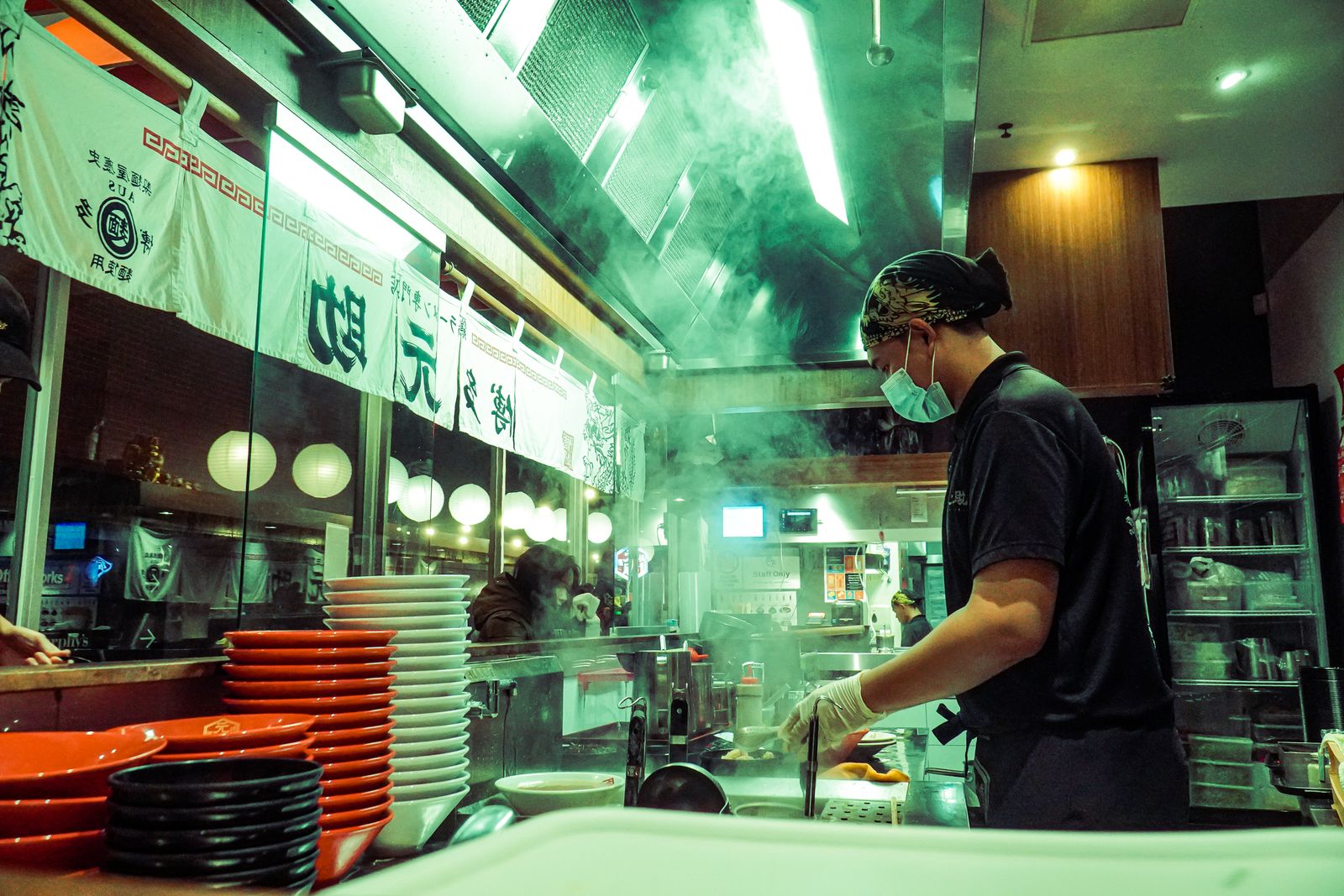
Every cooking school in the world teaches the same rule about stock: never let it boil. Keep it at a bare tremble, skim the scum, and you will get a clear, clean liquid. That rule is correct for consomme, for chicken stock, for the shoyu broth we pull at a whisper for six hours. It is completely wrong for tonkotsu, and the difference is the single most important thing in our kitchen.
Tonkotsu is not a stock. It is an emulsion. The whole point is to take fat, collagen and water, which do not want to mix, and force them into a stable suspension that coats your mouth and clings to a noodle. The only tool that does that at scale is mechanical agitation, and in a stock pot that means a hard, violent, uncovered boil for most of a day.
What the boil is actually doing
Pork femur and trotter are mostly collagen and marrow wrapped in bone. At a simmer, collagen slowly unwinds into gelatin and dissolves. That is useful but it is not enough on its own: gelatin alone gives you a broth that sets in the fridge but still tastes thin and looks clear.
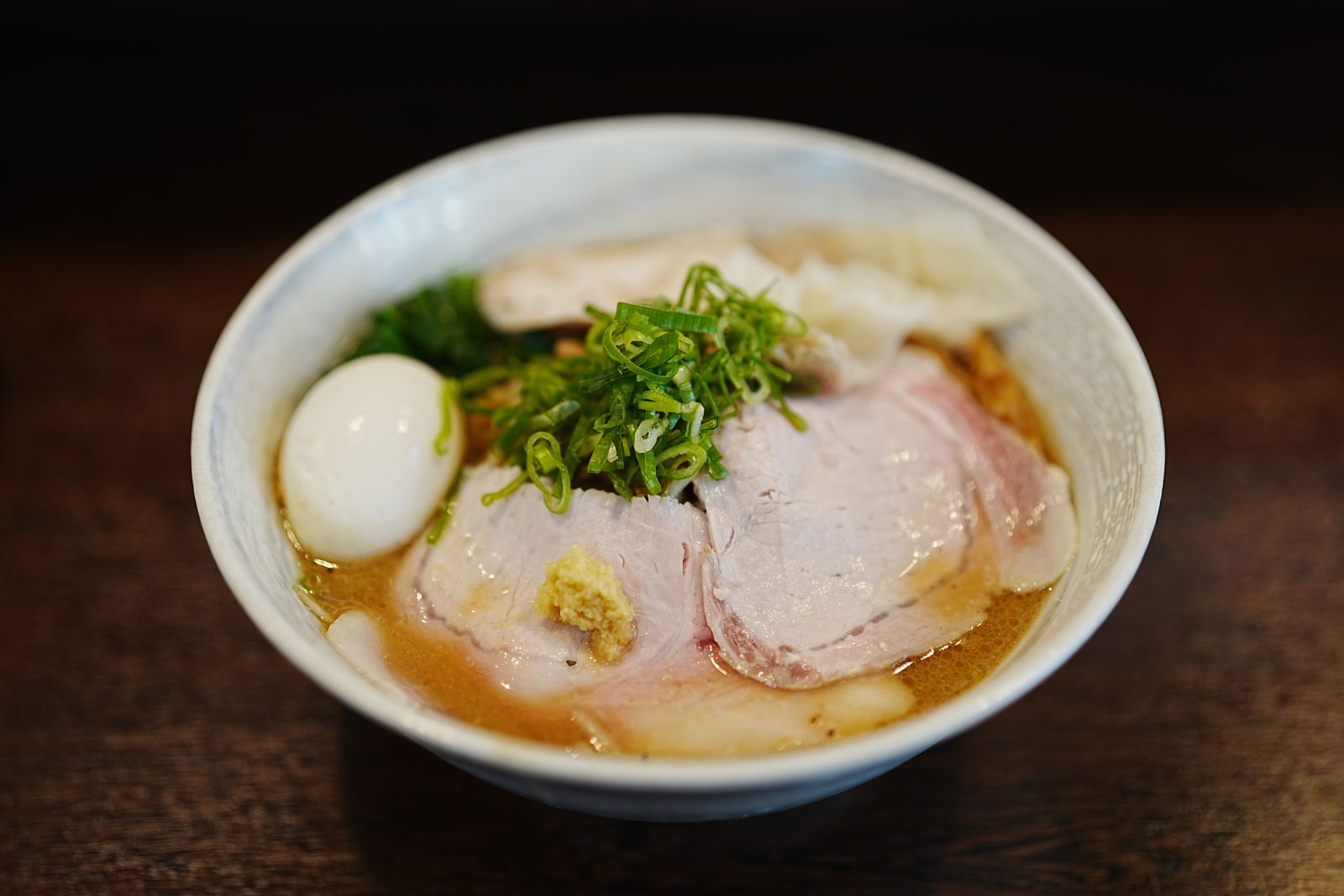
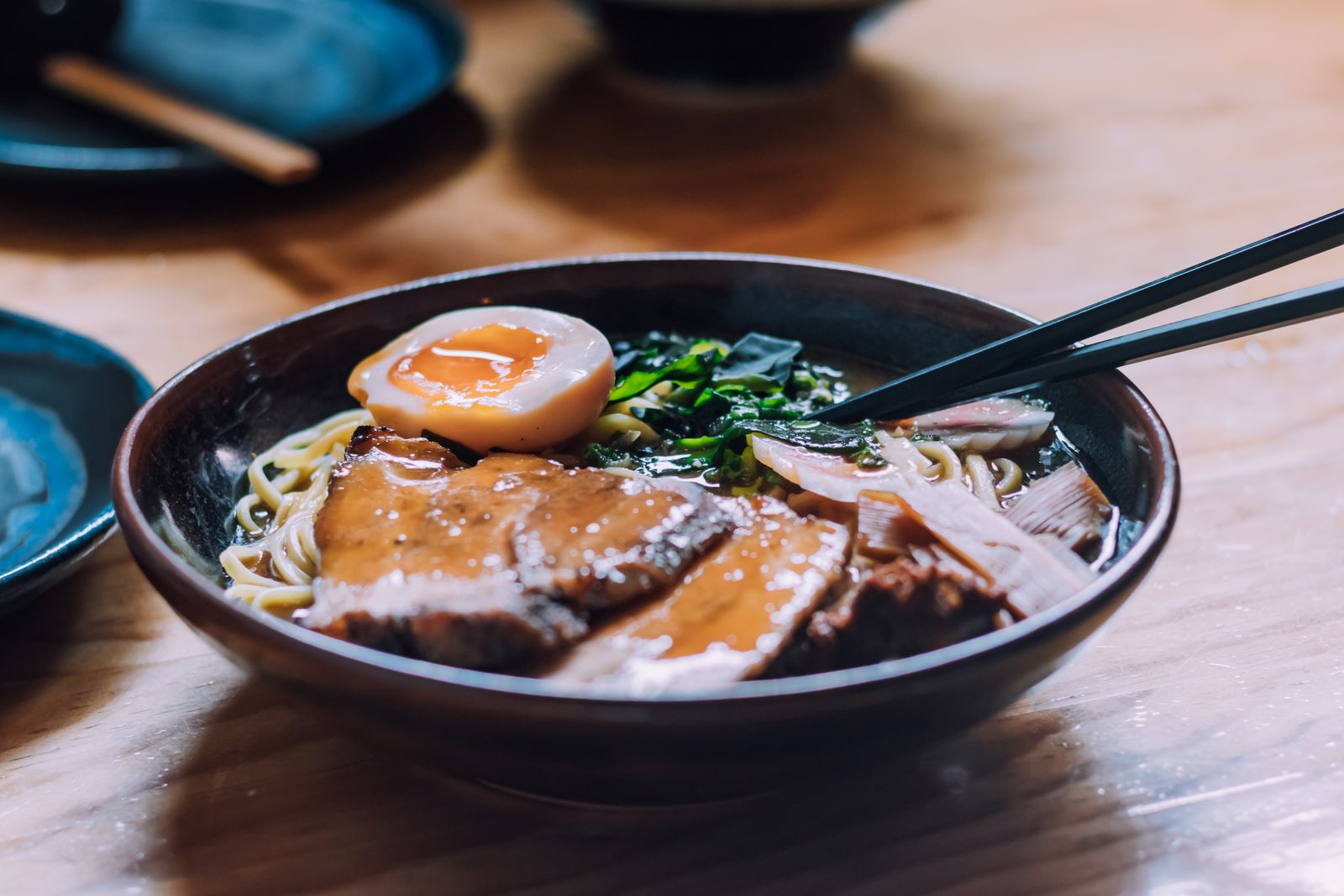
At a rolling boil, two extra things happen. Marrow and back fat are sheared into droplets small enough to stay suspended, and the dissolved gelatin coats those droplets and stops them coalescing back into a slick on top. That is a textbook emulsion, with gelatin doing the job a chef would normally hand to egg yolk or mustard. The opaque white colour people associate with tonkotsu is simply light scattering off millions of fat droplets. If your broth is beige and translucent, the emulsion never formed.
This is also why tonkotsu is the one broth you do not skim obsessively. Scum in the first ten minutes is coagulated blood and should go, which is why we blanch and scrub the bones and throw that water away. After that, most of what rises is emulsifiable fat, and pulling it off is pulling out the body you spent all day building.
Eighteen hours, and why not twenty-four
We land on eighteen hours because that is where our bones stop giving. Somewhere around hour fifteen the broth reaches roughly eleven percent solids and stops climbing. Run it to twenty-four and you get a marginally thicker liquid that has also started to taste scorched and one-note, because the aromatics have long since given up and the reduction has concentrated the least interesting compounds.
The aromatics go in at hour sixteen for exactly that reason. Charred sweet onion, a whole garlic head, ginger and leek tops need about six hours to give up what they have. Add them at the start and by hour eighteen they have boiled to bitterness and contributed nothing but colour.
The top-up rule
An uncovered pot at a full boil loses a lot of water. We top up once, at hour ten, back to the original line, and we do it with boiling water from a second kettle. Cold water crashes the temperature, the boil stops, the emulsion partially breaks, and it takes an hour to recover. The cook logs the time and volume on the pot chart so whoever takes over at handover knows exactly where the pot stands.
That log is not bureaucracy. It is the only way five different people across two shifts can produce the same broth on a Tuesday and a Saturday.
If your broth is beige and translucent, the emulsion never formed. The colour is the evidence.
Why the other four broths stay quiet
Our shoyu broth is whole chicken and kombu held so gently that the surface barely moves. We want it clear and clean because the barrel shoyu tare is the flavour and a cloudy base would muddy it. The shio is gentler still, with dried scallop and kombu steeped cold overnight before any heat is applied, because heat above about 140F draws bitterness out of kombu.
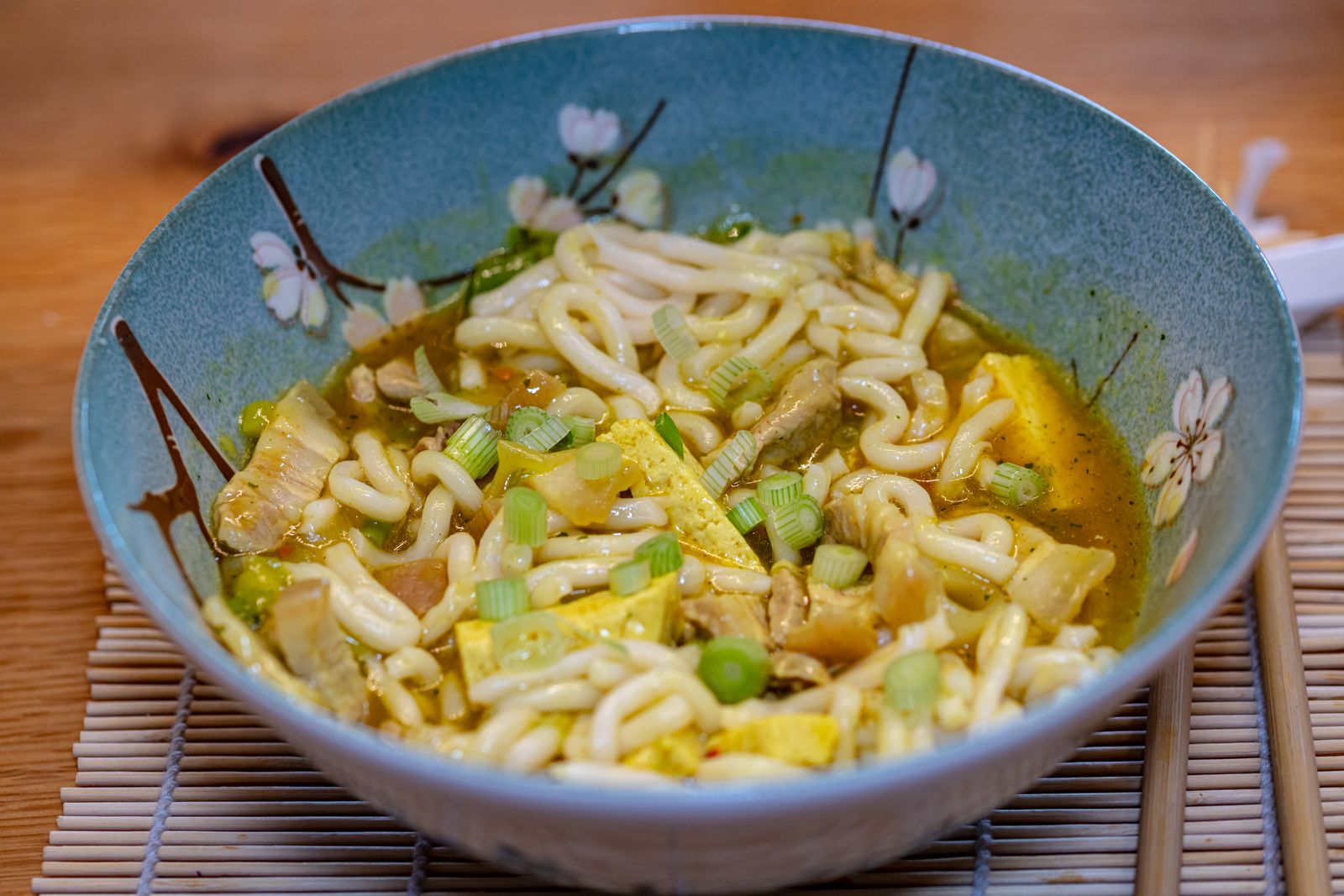
The kombu shiitake dashi for the vegan bowl never boils at all. Twelve hours cold, then forty minutes at a temperature that would horrify a tonkotsu cook. Boiling kombu makes it slimy and boiling shiitake makes it taste like wet cardboard.
The spicy miso is the only hybrid: tonkotsu base, blended with three misos off the heat, because miso loses its aroma within minutes of hitting a boil.
What this means when you sit down
If you want to understand a ramen shop in one bowl, order the clear one. Anyone can hide behind fat and chili. A shoyu bowl is six hours of restraint, a two-year tare and nothing to cover a mistake with.
Then order the tonkotsu, run a spoon across the surface, and watch whether the coating sheets or breaks. That is the test the kitchen runs at hour twenty, and it is the only test that matters.